Happy Pills - Oral Sedation
Home | What is Dental Phobia? | What's Your Fear? - Common Dental Phobias | What's Your Fear? - For Abuse Survivors and Their Dentists | Making Up Your Mind | Finding Mr (or Ms) Right | Doomsday - The First Appointment | Overcoming Fears 1 - Psychological Methods | Overcoming Fears 2 - Dental Sedation | The Aftermath - and the Neuropsychology of Fear | Tips & Tricks | Sympathetic Dentists Database | DIY Dentistry | Dentists' Corner: Dealing with Dental Anxiety | New Stuff! Fun Dentistry with HealOzone & Co. | Links to Dental Phobia and Dental Health Websites

Oral Sedation

Dental Fear Central - Your Hub for Dental Phobia Information

Links to other sedation methods: IV Sedation , Inhalation Sedation


Most commonly, oral sedation (usually in the form of anti-anxiety or "happy pills") is prescribed for relieving anxiety in the hours immediately before a dental appointment. An anti-anxiety or sedative-hypnotic drug (see below) taken the night before the appointment, an hour before going to bed, can help with falling asleep and getting some rest. Alternatives include going on the lash (i. e. having a few scoops) the night before or stocking up on rescue remedy... but find out more below!


Anti-Anxiety Pills (Benzodiazepines or "Benzos")

pills2.gif

In dentistry, the most commonly prescribed drugs for (or rather against =)) anxiety belong to the "benzodiazepine" family. You've probably heard of them by their tradenames - for example, Valium, Halcion, Xanax, or Ativan.

Benzos directly and efficiently decrease anxiety by binding with receptors in the brain which tone down activity in those parts of the brain responsible for fear.

Benzodiazepines come in two flavours:

1) Sedative-Hypnotics: drugs which induce a calming effect, including drowsiness ("sedation"). In higher doses, they induce a state resembling physiological sleep ("hypnosis").

2) Anti-Anxiety Drugs: drugs which act primarily to relieve anxiety and make you feel calm.

While all benzodiazepines act as sedatives AND anti-anxiety drugs, some are more targeted at brain areas which control sleep and wakefulness, while others are more specifically targeted at brain areas which control emotions such as fear. The classification of whether a benzodiazepine is sedative-hypnotic or anti-anxiety is to some extent an arbitrary one, as the boundaries are quite fluid. As a rule of thumb, in higher doses benzos act like sedatives and may promote sleep, while in lower doses, they simply reduce anxiety without sedation.

Benzodiazepines are Central Nervous System (CNS) depressants (for example, there can be a decline in blood pressure and breathing - which is good, because if your heart isn't racing, you'll feel calmer). They should NOT be mixed with other CNS depressants such as alcohol. Don't self-medicate and stick to the dose your dentist or doctor recommends (which may be a higher dose than specified on the drug package insert. Reason being that the package inserts recommend a dose to induce sedation or sleep in a nonstress situation such as the home environment). It IS possible to overdose on these things, and overdoses could lower your breathing to dangerously low levels, which could result in coma or even death.

In case this sounds scary - unless you make a deliberate attempt to overdose, it's extremely unlikely for any dangerous symptoms to develop. The reason why benzos are so widely used is precisely because they're safe.

People for whom benzos have worked well describe them as "working wonders", as having a calming and relaxing effect, or as making you feel "out of it". Giddiness, confusion and saying silly things are also common. Benzos may make you forget large parts of what happened while you were under their influence, which can be handy if you don't want to remember very much! However, this effect is not reliable.

Below you'll find a list of some of the more common benzodiazepines, their tradenames, recommended doses (for nighttime sedation or preoperative anxiety control in healthy adults excluding the elderly), when to take them, onset and duration, and when peak plasma levels are reached. Please note that the information below is provided for educational purposes only and that Dental Fear Central accepts no reponsibility for their accuracy. You are advised to follow your health care provider's instructions at all times, as many factors can affect a drug's action and your reaction to it (and typos can - and do - occur). Should you happen to live out in the sticks and you're tempted to self-medicate, make sure to double-check the information provided below and to take into account any contraindications!

Generic Name
Tradename
Dose (healthy adult) and when to take

Onset, Plasma Peak, Duration

Triazolam
Halcion
0.25 - 0.5 mg one hour before bedtime or one hour before appointment. Used in US dental offices because of rapid onset of action and good anterograde amnesia.

Onset: 15-30 min
Peak: ca. 1 hr
Duration: ca. 1.7-3 hrs

Midazolam
Hypnovel
Dormicum
Versed
15 mg - 30 mg one hour before bedtime or 7.5 - 15 mg one hour before appointment (applies to tablet form. Versed is a syrup and requires different dosage).

Onset: 15-30 min
Peak: 30-40 min
Duration: 1-4 hours

Lorazepam
Ativan
2-4 mg one hour before bedtime or appointment

Onset: 15-45 min
Peak: 2 hrs (range: 1-6 hrs)
Duration: up to 48 hours

Temazepam
Restoril
30 mg one hour before bedtime or before appointment.

Onset: 30 min
Peak: 2-3 hrs
Duration: 6-8 hrs

Flurazepam
Dalmane
30 mg one hour before bedtime

Onset: 15-45 min
Peak: 0.5-1 hr
Duration: 7-8 hrs

Diazepam
Valium
10 mg one hour before bedtime or appointment

Onset: 30-60 min
Peak: 1-2 hrs
Duration: up to 24 hrs

Chlordiazepoxide
Librium
SK-Lygen
Slow onset. 5 to 10 mg three to four times daily on the day before the appointment.

Onset: 1-2 hrs
Peak: 2-4 hrs
Duration: up to 24 hrs

Alprazolam
Xanax
Dosage for anxiety reduction is 0.25 to 0.5 mg three times a day.

Onset: 1-2 hrs
Peak: 1-2 hrs
Duration: up to 24 hrs

Oxazepam
Serax
15 to 30 mg on the day of the appointment. Dosage for mild to moderate anxiety is 10 to 15 mg three to four times a day. Low incidence of drowsiness.

Onset: 30-60 min
Peak: 1-4 hrs
Duration: 6-12 hrs


Yellowish boxes indicate that the benzo is classified as a sedative-hypnotic, while blueish boxes indicate it's classified as an antianxiety drug. Please note that Triazolam (Halcion) is not available in the UK.

Dentists who offer oral sedation will have particular preferences, depending on their experience (and experiences) with various drugs. The above are only guidelines.

If you're using benzos in the weeks before making an appointment (prescribed by a doctor), the doses tend to be lower than the single doses specified in the table above.

tn_camel_pv.gif

Out-in-the-sticks tip:

For the management of mild to moderate anxiety before the appointment, take 30 mg temazepam (for most average sized people) 45 minutes to one hour before treatment. Advantage: relatively rapid onset, decent sedation time, and relatively rapid recovery.

Alternatives: Diazepam - achieves peak plasma levels within 2 hours and 90% of the maximal clinical effect develops within 1 hour - but takes a long time to wear off. Or 15 to 30 mg oxazepam (let's say 1 hour beforehand? my guess).

To induce sleep the night before the appointment, triazolam (0.25 - 0.5 mg) or flurazepam (15-30mg) one hour before bedtime.

Always read the label!

You can order these and other prescription drugs online, but you are requested to check if this is legal in your country first (it's illegal in most first-world countries - you've been warned!): www.thedrugdatabase.com


Travel warning!

You shouldn't travel on your own after you've taken any of those pills - make sure you have an escort, even if you're walking there! It's easy to become disorientated and miss your stop if going by bus or train, or walk straight in front of a car - or you might even forget that you're on your way to your dentist's ("hey cool" I hear you say =))... So find someone to accompany you. And please don't pop pills and drive!

When not to take benzodiazepines:

This varies from drug to drug. For example, some benzos are safe to take if you have liver problems, while others are not, and some are safe to take if you have heart problems, while others are not. You should be sure to inform your doctor or dentist if any of the following apply: known allergy to the drug, narrow-angle glaucoma, pregnancy, severe respiratory disease (COPD), congestive heart failure (CHF), impaired kidney or liver function, depression/bipolar disorder/psychoses, chronic bronchitis and some other conditions. Also if you're taking other medications be sure to mention this.

For more information on particular drugs, including when not to take them (contraindications) and possible side-effects, visit RxList.com or netdoctor.co.uk's medicines database.

Oral sedation - A hit-and-miss affair?

One problem associated with oral sedation is that it can be a bit of a hit-and-miss affair. Basically, you don't know how well the drug will be absorbed from the stomach. Because the response to a drug is unpredictable anyway, you have to tailor the dose such that the 25% of people most susceptible to the drug won't get an overdose. But that means that the 25% who are least susceptible won't get enough... Body weight, height, or gender are not good indicators of how high the "ideal dose" should be, because the drug exercises its effects on the nerve cells in the brain. So, if you're quite large, don't take a little extra "just in case". A standard dose might have virtually no effect on a petite female, but a large guy might be totally zonked after taking the same dose... you get the picture!

Other factors which might affect the efficacy of the drug include whether you want it to work and your (and your doctor's/dentist's!) belief that it will work (the so-called "placebo effect", which, BTW, has been shown to work even if you're aware of it). If you don't want the drug to work, for example because you're scared of losing control, your brain will try and fight the effects of the drug. As a result, you may not experience much of an effect at all, or else experience the effect as unpleasant. In which case, oral sedation may not be for you.

Controversies in Dentistry - Titration of Oral Sedatives

Occasionally, Halcion or similar (but mainly Halcion) are used in the US as an alternative to IV sedation. One of the effects of Halcion is that it can induce amnesia for what's happening from the point the drug kicks in to the point it wears off. [All benzos can have this effect to some extent, but Halcion somewhat more so than others. However, the amnesia effect is unreliable - this also applies to Halcion]. If Halcion is given intermittently one hour before and then during treatment (e. g. at 1 hour time intervals), it can work well for some people as a substitute for IV sedation.

However, in 2002 the American Dental Association came out in a position paper against titration of oral sedation medication (titration means adding more of the drug, i. e. giving extra pills until the desired effect is achieved). This statement followed the rise of an organization called the "Dental Organization for Conscious Sedation" (or DOCS for short) which was founded in 2000 by a DDS called Michael Silverman (not to be confused with "Dr Silverfill"!!) and provides training in oral sedation. Today (this refers to 2004), DOCS has more than 1,900 member dentists in the US. DOCS is where the misleading term "sleep dentistry" (applied to oral sedation) was first invented. The training courses also advocate titration of oral medication. Many dentists say (and the American Dental Association agrees with them) that this practice is unsafe and/or that the training is not thorough enough. Even with thorough training, many dentists believe that titration of oral medication is too unpredictable. Oral medication can take up to two hours to absorb - so a patient could swallow a pill and the dentist, not seeing the effects of the drug an hour or two later, delivers a second pill. Meanwhile, the first pill is being absorbed and the patient has ingested twice the amount he or she needs. To be fair, it should me mentioned that there have been no adult deaths reported using the DOCS regime so far.

Because of the medical and legal situation, many dentists do not feel comfortable with this method. If you'd like to find out more about this controversy, click here.


Alcohol

tn_cocktail3.gif

While alcohol is another CNS depressant, its use as a sedative in dentistry has never been popular. Unless you visit Lloyd Jerome's practice in Glasgow, of course ;) (see his excellent article on the use of distraction in dentistry! Still, alcohol has long been used by apprehensive patients as a means of self-medication before dental appointments. I've come across the odd success story by people who've overcome their dental phobia for whom a G&T or two (or similar) before their first appointment did the trick.

drinking202.gif

Don't go overboard, though! You're not doing your dentist or yourself any favours by stumbling in reeking of beer and whisky =) ... Alcohol should be avoided before actual treatment, because it could interfere with the local anaesthetic or other medications. Let your dentist know if you've had a few!


Non-benzodiazepine hypnotic anti-anxiety drugs - Ambien and Sonata

Ambien (that's the tradename for zolpidem tartrate) is a strong sedative with only mild anxiety-reducing properties. It has been shown to be good for falling and staying asleep. You shouldn't take it if you've taken it before and it didn't agree with you. It should be used with caution if you have acute intermittent porphyria (a particularly severe form of porphyria - a genetic abnormality of metabolism - you'll probably know all about it if you have it), your liver or kidney function is impaired, if you're addiction-prone (internet addiction doesn't count!), during pregnancy and breast-feeding. Usual dose: 10 mg one hour before bedtime.

Sonata (the tradename for zalepon) is very similar to Ambien. Take 5 to 10 mg one hour before bedtime.

As with any drug, some people will experience side effects (dizziness, drugged feelings - but isn't that the point?, drowsiness, confusion, or various physical symptoms).


"Sleeping pills" (Barbiturates)

To be totally honest, I reckon barbiturates for use as "sleeping pills" should be banned, but anyway... just my opinion. They have a very high addiction potential and can cause severe depression as well as impaired judgment. Thankfully, their use has declined over the last decades.

Barbiturates are generalized CNS depressants, depressing the thinking parts and emotional centers of the brain as well as the center which controls sleep and wakefulness. Compared to benzos, it's easier to overdose on "sleeping pills", which can dangerously lower your breathing, resulting in coma or even death. So if you're considering barbiturates, stick to the recommended dose!

Taking barbiturates when you're in pain is not the brightest idea on the planet because they decrease pain tolerance - they should not be given if you're in pain or if you may experience pain after treatment (when the local anaesthetic has worn off).

Only the short-acting barbiturates, pentobarbital sodium (tradename: Nembutal) and secobarbital sodium (tradename: Seconal) are occasionally used in dentistry. In case you're still into it, the average recommended dose for adults is 100 mg one hour before the scheduled appointment for Nembutal, and 100-200 mg one hour before the appointment for Seconal.


Antihistamines - Atarax and Phenergan

While antihistamines are primarily used to manage allergies, several of them have an interesting side effect: sedation! Some antihistamines, including Atarax and Phenergan, have a strong calming and sleep-inducing effect, and are marketed primarily as sedative-hypnotics. They also help to prevent nausea and being sick.

Hydroxyzine (tradename: Atarax) is a sedative which kicks in after about 15 to 30 minutes. The maximum effect is achieved after about 2 hours, and the drug starts wearing off after about 3 or 4 hours. The incidence of side effects is quite low, but you may feel drowsy. For managing anxiety in the days leading up to the appointment, the adult dose ranges from 25 mg three times a day to 100 mg four times a day. To calm your nerves for the appointment, the dose is 50 to 100 mg one hour before treatment.

Promethazine (tradename: Phenergan) is pretty safe but can upset the extrapyramidal nerve cells in the brain, which can result in symptoms similar to parkinsonism. If this happens, you have to stop taking the drug and possibly take an antiparkinsonism drug. Dosage: 25 to 50 mg one hour before treatment, or 50 mg one hour before bedtime.

Again, don't pop pills and drive!


Herbal alternatives

herbal.jpg

No - not THAT herb!!! no, I'm talking about "rescue remedy"!


Rescue Remedy

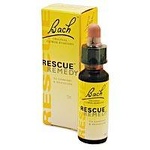
rescueremedy.jpg

Rescue remedy is the most famous of the Bach flower remedies (which you may have heard of). Unlike the other Bach flower remedies, this one is a mix of five different remedies (Cherry Plum, Clematis, Impatiens, Rock Rose and Star of Bethlehem) which can make you feel more calm and relaxed during a stressful time or event.

You may be inclined to think "homeopathy? - bah, humbug". And who could blame you? Homeopathy is about taking a substance and diluting it... then diluting it again... and again... until you are left with a solution which contains such a weak dilution that there isn't any of the original substance left (still, some people swear by it. Personally, I reckon it's a placebo effect - but placebos have been shown to be almost as efficient as "the real thing" in many instances and don't have any side-effects, so what the heck?)

Actually, Bach flower remedies aren't homeopathic. Unlike homeopathic remedies, they contain an actual diluted herbal extract in alcohol (the alcohol is there as a preservative). Rescue remedy has received some rave reviews from people trying to calm their nerves before a dental appointment (and in the days or weeks leading up to the first appointment) - so why not give it a try? You've got nothing to lose, as there are no side effects. It's the only form of oral sedation which will allow you to drive to and from your appointment on your own.

Dosage: "In an emergency Rescue Remedy can be taken neat from the bottle, four drops at a time, and as frequently as required. Otherwise put four drops in a glass of water and take frequent sips until the emotions have calmed." (from the Bach Centre's website, www.bachcentre.com). Rescue remedy is available in most pharmacies and natural health stores.


Back to Overcoming Fears 2 - Dental Sedation

DISCLAIMER: Statements made on this web site are for entertainment and/or educational purposes only and are not intended as a substitute for the advice of a living, breathing health professional who can deal with you personally. This is a personal website written by individuals who are not dental or mental health professionals, unless stated otherwise on individual webpages. The authors do not claim to represent the opinions of all health professionals. For more information on how to select a dentist or a therapist, see Find a Dentist and Find a Therapist.